
 Shop now
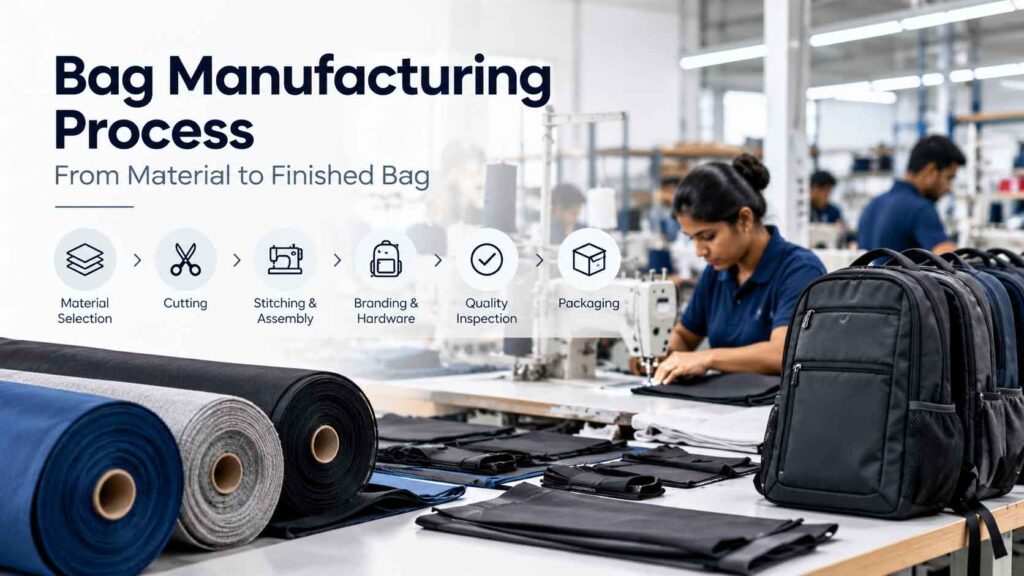
The bag manufacturing process involves several carefully planned stages that turn raw materials into a finished, functional product. From selecting the right fabric to stitching, branding, quality inspection, and packaging, every stage contributes to the final quality of a bag.
For businesses sourcing bags in bulk, understanding the manufacturing process can help them communicate their requirements and evaluate products more effectively.
1. Material Selection
The first stage of the bag manufactxuring process is selecting suitable materials.
Depending on the product and its intended use, manufacturers may work with materials such as:
- Polyester
- Nylon
- Canvas
- Cotton
- PU
Material selection can influence the bag’s durability, weight, appearance, and overall cost.
2. Pattern Making and Cutting
Once the material is finalized, patterns are prepared according to the bag’s design and dimensions.
The fabric is then cut into the required components, such as:
- Front and back panels
- Side panels
- Pockets
- Straps
- Handles
- Flaps
Accurate cutting helps maintain consistency throughout production.
3. Stitching and Assembly
The cut components are brought together through stitching and assembly.
Depending on the design, this stage may include attaching:
- Compartments
- Pockets
- Handles
- Shoulder straps
- Linings
- Padding
Reinforcement may also be added to areas that experience greater stress during regular use.
4. Branding and Hardware
The next stage can include adding branding and functional components.
These may include:
- Logos
- Labels
- Zippers
- Buckles
- Pullers
- Clips
For customized bags, branding specifications such as logo size, placement, colour, and application method should be finalized before production.
5. Quality Inspection
Quality inspection is an important part of the bag manufacturing process.
The finished product can be checked for:
- Stitching quality
- Dimensions
- Material consistency
- Zipper and hardware function
- Branding accuracy
- Loose threads
- Overall finishing
For bulk orders, consistency across the production batch is particularly important.
6. Packaging and Dispatch
After the final inspection, the finished bags are prepared for packaging and dispatch.
Depending on the order, packaging may include individual protection, bulk cartons, product labels, or other buyer-specific requirements.
Why Understanding the Bag Manufacturing Process Matters
Understanding the bag manufacturing process helps businesses make better decisions when sourcing bags from a manufacturer.
Before placing an order, buyers should clearly discuss:
- Product specifications
- Material
- Quantity
- Customization
- Sample approval
- Quality requirements
- Packaging
- Delivery requirements
Clear communication at each stage can help reduce misunderstandings and maintain consistency in bulk production.
Looking for a Bag Manufacturing Partner?
Mantax Lifestyle works with businesses looking for bag manufacturing and bulk production solutions. Discuss your product specifications, customization requirements, and manufacturing needs with the Mantax Lifestyle team.
FAQ
What are the main stages of the bag manufacturing process?
The main stages include material selection, pattern preparation, cutting, stitching, assembly, branding, quality inspection, packaging, and dispatch.
What materials are commonly used in bag manufacturing?
Polyester, nylon, canvas, cotton, and PU are among the materials commonly used, depending on the bag’s intended application and design.
Why is quality inspection important in bag manufacturing?
Quality inspection helps identify issues with materials, stitching, dimensions, hardware, branding, and finishing before the bags are delivered.